Calvert County Health Department

- Adult Evaluation Reviews (AERS)
- Breast and Cervical Cancer Program
- Destination Wellness
- Developmental Disabilities Program
- Health Insurance Programs
- Home and Community-Based Services
- Maternal and Child Health
- Medical Assistance Program
- Medical Assistance Transportation Program
- Reproductive Health
- Reproductive Health Clinic Schedule
- Child Safety Seats
- Colorectal Cancer Awareness & Screening
- Diabetes and Prediabetes
- E-Cigarettes and Vaping
- Heart Health
- Injury Prevention
- Oral Cancer Prevention
- Poison Prevention
- Responsible Tobacco Retailer Program
- Skin Cancer Awareness
- Quit Tobacco Program
- Stroke Awareness
- Quit Tobacco for Pregnant Women
- Tobacco Use Prevention








Information about Hantavirus
Calvert County Health Department wants to assure everyone who lives and works in our county that there is a very low local risk of hantavirus infection from the cruise ship that has recently been in the news. Eighteen Americans from the ship that traveled from Antarctica to South America are now under observation in specially designed quarantine hospitals in Nebraska and Georgia. They will remain there until doctors are certain that they cannot transmit infection to anyone in their home communities. None of the people under observation live in Calvert.
The Maryland Department of Health is monitoring two Maryland residents who were on a flight that briefly included a cruise ship passenger infected with hantavirus. The two Maryland residents with potential exposures were not passengers on the cruise ship. Their potential exposures occurred during air travel overseas. In order to protect their privacy, MDH will not release additional information on the Maryland residents. At this time, the risk to the public in Maryland remains very low.
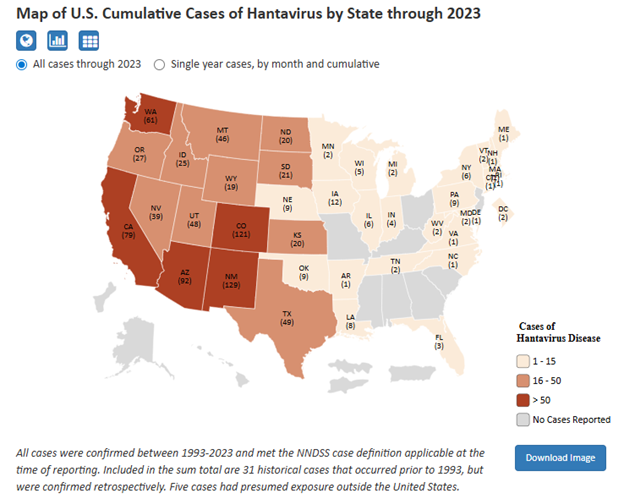
Hantavirus is a rare cause of infection in humans. The virus is typically transmitted by mice or other rodents. The strain that caused illness on the cruise ship (Andes strain) is a rare type of hantavirus that can spread directly between people. That strain of the virus is not present in the U.S. Almost all cases of hantavirus in the U.S. are transmitted by deer mice and occur in the western states. The graphic below shows the total number of cases in the U.S. over a 20-year period (1993-2023). Hantavirus infection is extremely rare in Maryland, which averages one case per decade:
The reason for concern, and the need to quarantine those infected, is that hantavirus can cause severe respiratory disease, damage the kidneys, and lead to dangerous changes in blood pressure (shock). Even with medical treatment, there is a 35% risk of death.
Development of symptoms after exposure to hantavirus is slow. On average, it takes 2-3 weeks for someone to begin showing signs of illness. For some people, it may take as long as 6 weeks for symptoms to develop. As a result, you will likely hear updates over the next 6 weeks as those in quarantine are monitored and eventually deemed safe to return home.
Although we do not expect this incident to affect the health of anyone in Calvert, it is a good reminder to wear gloves and a good face mask when entering attics or other spaces in your home that mice have wandered into, especially when nearby farms are plowed or the weather turns cold in late fall/early winter. If you have found mice in your home in the past, please try to seal any areas of possible entry to prevent their return. If you set traps, remember to protect yourself when handling any devices containing rodents or their droppings.
If there are any changes that could affect your health, we will keep you updated.
